Gambling
Three Card Poker Strategy: When to Play Your Queen-High Hand
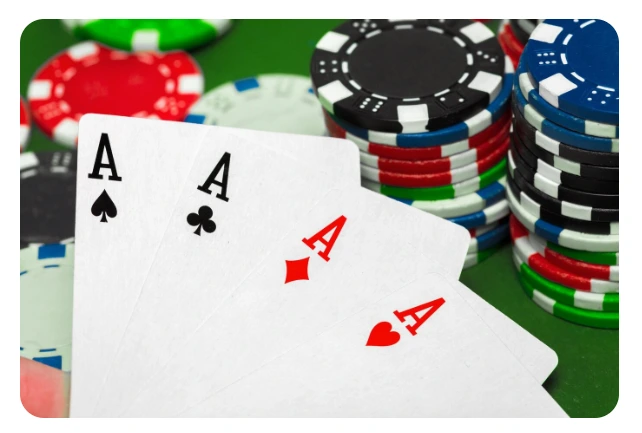
Three Card Poker has earned its reputation as one of the most popular table games on casino floors and across digital gaming platforms. Its enduring appeal is easy to understand because it combines the fast-paced action of traditional casino games with the strategic decision-making found in poker. Unlike Texas Holdem or Omaha, where you compete against other players at the table, Three Card Poker pits you directly against the dealer in a heads-up duel. This streamlined format makes the game accessible to beginners while still offering enough strategic depth to reward knowledgeable players. Yet despite its apparent simplicity, many players throw away money simply because they do not understand the optimal mathematical strategy, particularly when faced with marginal holding decisions like whether to play or fold a Queen-high hand.
The Core Mechanics of Three Card Poker
Before diving into advanced strategy, it helps to review the foundational flow of the game. Every round begins when a player places an Ante wager in the designated betting circle. Additionally, players have the option to place side bets like Pair Plus or Prime, though these side bets operate independently of the main game and carry a significantly higher house edge.
Once all Ante wagers are locked in, both the player and the dealer receive three cards face down. The player then picks up their cards, evaluates their poker hand, and faces a critical fork in the road. You must choose either to fold your hand, which forfeits your initial Ante bet and ends the round immediately, or to make a Play bet that is equal in value to your original Ante wager.
After all active players have made their decisions, the dealer turns over their three cards. For the dealer to qualify and remain active in the round, they must hold at least a Queen-high card or better. If the dealer fails to qualify, the Ante bet wins even money, and the Play bet is returned to the player as a push. If the dealer holds a qualifying hand, the player hand is compared directly to the dealer hand, with the higher poker ranking winning both the Ante and Play bets. Hand rankings in Three Card Poker are slightly modified compared to traditional five-card poker because a three-card straight outranks a flush due to mathematical probability.
The Golden Rule: The Queen-Six-Four Strategy
The most common mistake made by recreational players in Three Card Poker is playing far too many hands. Because players naturally want to see every card and hate the feeling of folding before the showdown, they routinely make the Play bet with garbage holdings. This emotional decision-making is precisely what the casino relies on to generate its long-term profit.
To minimize the house edge and play mathematically optimal poker, you must adhere strictly to the foundational strategy rule of the game. That golden rule dictates that you should always make the Play bet with any hand consisting of Queen-Six-Four or better.
Conversely, any hand worse than Queen-Six-Four should be folded immediately. This means that if your highest card is a Queen, your second-highest card is lower than a six, or your second card is a six but your kicker is lower than a four, you are mathematically required to surrender your Ante bet. While folding feels painful in the short term, folding weak hands is the exact mechanism that protects your bankroll from unnecessary bleeding over the long run.
Decoding the Marginal Queen-High Dilemma
Understanding the Queen-Six-Four threshold requires looking closely at how marginal Queen-high hands interact with the dealer qualification rules. The dealer requires a Queen or better to open. If the dealer does not qualify, you win even money on your Ante bet, and your Play bet pushes. This single rule shifts the mathematical landscape dramatically.
When you hold a Queen-high hand, you are sitting right on the border of the dealer qualification threshold. If your holding is a Queen-Ten-Two, your hand is strong enough relative to the dealer’s distribution to justify making the Play bet. You hold blockers that reduce the likelihood of the dealer holding strong cards, and your high card beats a Jack-high or lower distribution immediately if the dealer fails to qualify.
However, as your kicker cards drop below the crucial threshold of a six and a four, your expected value plummets. Holding a Queen-Five-Two or a Queen-Six-Three might look playable at a glance because you hold a Queen, but the math proves that these hands lose too often against the dealer’s qualifying range. When you factor in the additional cost of the Play bet on a losing hand, surrendering the Ante by folding becomes the mathematically superior choice.
The Mathematics of House Edge and Optimal Play
The house edge in Three Card Poker is determined by how well you execute the strategy. If you play every single hand blindly without regard for card values, the house edge balloons to over three percent. However, when you implement optimal strategy—folding every hand worse than Queen-Six-Four and playing everything else—the house edge on the Ante bet drops to a respectable 3.37 percent.
If you factor in the optional Play bet correctly, the combined house edge on your total action drops even further to roughly 2.01 percent. This makes Three Card Poker one of the more reasonable table games on the casino floor, provided you maintain strict discipline. The moment you start drifting from the Queen-Six-Four rule and playing garbage hands out of boredom, you hand free percentage points directly back to the casino.
Comparing Strategy: Ante Play Versus Pair Plus
Many players confuse the strategy of the main Ante and Play game with optional side bets like Pair Plus. It is vital to understand that the strategy for the main game—including the decision to play Queen-high hands—has no bearing on whether you should play side bets.
The Pair Plus side bet is entirely independent of what the dealer holds; you simply win if your own three-card hand contains a pair or better. While Pair Plus offers exciting payouts for three-of-a-kind or straight flushes, it carries a substantially higher house edge, often ranging from 2.3 percent to over 7 percent depending on the specific paytable utilized by the casino.
Treating side bets as a fun, occasional indulgence rather than a core strategic element protects your bankroll. Your primary focus should remain squarely on executing the Queen-Six-Four rule on the main betting layout.
Practical Discipline at the Table
Mastering Three Card Poker strategy is ultimately an exercise in discipline. When you sit down at a crowded table, social pressure can sometimes influence your decisions. You might watch other players making reckless Play bets with Jack-high or Ten-high hands because they are chasing a lucky river card or simply want to stay in the action.
Resisting this peer pressure is essential. Poker and table games reward objective mathematical execution over emotional hunches. When you are dealt a weak Queen-High hand like Queen-Five-Deuce, folding quickly requires letting go of your ego and accepting a small, controlled loss rather than compounding the error with an uncalculated Play bet.
By memorizing the Queen-Six-Four threshold, respecting the dealer qualification rules, and separating the main game strategy from volatile side bets, you can navigate Three Card Poker with confidence. Treating every hand as a calculated mathematical puzzle ensures that your bankroll stretches further, giving you maximum entertainment value and the best possible chance to walk away a winner.
Meta Title: Three Card Poker Strategy: When to Play Queen-High Hands Meta Description: Learn optimal Three Card Poker strategy. Discover when to play or fold Queen-high hands using the Queen-Six-Four rule and reduce the house edge.