The Intellectual Art of Poker: Strategy, Psychology, and Decision-Making in Modern Play
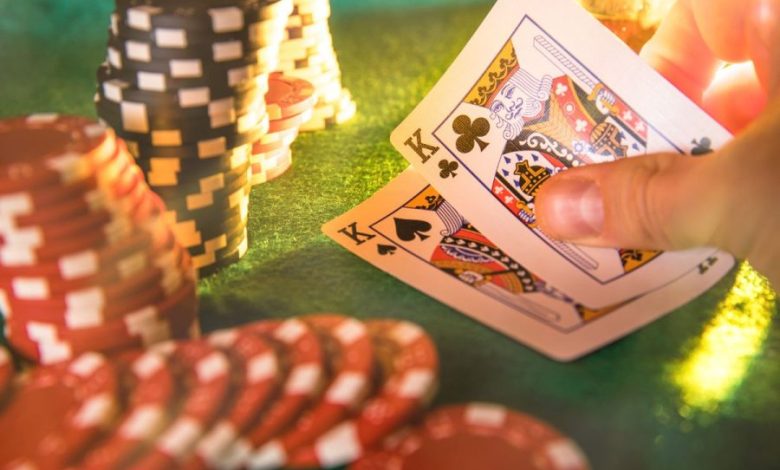
Poker is not just a game of chance; it is a refined blend of strategy, mathematics, and human psychology. Across casinos, online platforms, and global tournaments, poker has evolved into an analytical pursuit where success depends less on luck and more on insight, patience, and disciplined execution. The dynamics of poker have made it a subject of academic interest in game theory, behavioral economics, and cognitive science. To understand poker deeply is to explore how humans assess risk, interpret others’ intentions, and make decisions under uncertainty.
The Evolution of Poker into a Strategic Discipline
Poker’s roots trace back to early European card games like “poque” and Persian “as nas,” but it was in 19th-century America that the game matured into its modern form. Initially played in riverboats and saloons, poker represented the boldness of frontier culture—a mix of risk-taking, deception, and intellect. As it spread globally, variants such as Texas Hold’em, Omaha, and Seven Card Stud emerged, each demanding unique strategic adaptations.
The digital revolution of the 2000s marked a turning point. Online poker introduced massive data analytics, player tracking, and artificial intelligence models that reshaped strategic understanding. Today, poker is studied much like chess: a game of incomplete information where every decision must balance probability and psychology.
The Core Mechanics of Poker
At its foundation, poker revolves around the same principle: making the best possible five-card hand or convincing others to fold theirs. Yet, the simplicity of the rules masks the depth of its strategy. Understanding this structure is essential before diving into advanced analysis.
The Objective
The goal in poker is not necessarily to win every hand but to make mathematically and psychologically optimal decisions over time. Success in poker relies on expected value (EV)—a measure of how profitable a decision is in the long run.
The Decision Chain
Each hand involves a sequence of decisions, each influenced by:
- Position: Acting later in a hand gives informational advantage.
- Pot Odds: Comparing potential gain versus the cost to continue.
- Implied Odds: Considering future bets you can win if your hand improves.
- Player Tendencies: Adjusting decisions based on opponent patterns.
These interconnected decisions form the framework for high-level strategic thinking.
Mathematical Foundations: Poker as a Numbers Game
Mathematics is the invisible backbone of poker strategy. Professionals treat each hand as a calculation of probability, expected return, and risk.
Understanding Probability
Every decision in poker involves implicit probability. Whether determining the odds of hitting a straight on the turn or calculating the chance an opponent is bluffing, successful players use combinatorial logic. This helps determine:
- The frequency of winning hands in a given situation.
- The likelihood of improvement based on remaining cards.
- The risk-reward balance of a bet size.
Expected Value (EV)
Expected value determines whether a decision is profitable in the long term. For instance:
- A call that wins $200 forty percent of the time but loses $100 sixty percent of the time has a positive EV:
- (0.4 × 200) – (0.6 × 100) = +20
This means repeating the same decision would yield profit over time, even if it sometimes results in losses.
- (0.4 × 200) – (0.6 × 100) = +20
Game Theory Optimal (GTO) Strategy
Modern players rely on GTO models to develop balanced, unexploitable strategies. The idea is to play in such a way that opponents cannot predict or exploit your behavior. However, expert players blend GTO with exploitative strategy, adjusting to opponents’ weaknesses while maintaining theoretical soundness.
The Psychology of Poker: Reading Minds and Managing Emotions
Beyond mathematics, poker thrives on understanding human behavior. The psychological battle—reading opponents, concealing intentions, and managing one’s own emotions—is where intellect meets intuition.
The Power of Observation
Observation is central to poker psychology. Skilled players detect subtle “tells” such as:
- Timing of bets or hesitations.
- Micro-expressions and physical behavior.
- Betting pattern shifts after wins or losses.
- Frequency of aggression versus passive play.
These signals reveal confidence, fear, or deception—clues that translate into actionable insights.
The Art of Bluffing
Bluffing is the essence of poker strategy. It’s not about lying; it’s about representing a believable story with betting behavior. A successful bluff depends on:
- Credibility: Your betting line must align with the hand you’re representing.
- Table Image: Tight players bluff less often but are more believable when they do.
- Risk-Reward Ratio: A calculated bluff is not random but strategically justified.
Emotional Control and Tilt Management
Poker punishes emotional instability. “Tilt”—the emotional frustration following a bad beat—can lead to impulsive, irrational play. The most accomplished players develop emotional resilience through mindfulness, mental discipline, and acceptance of variance. They understand that short-term losses do not define long-term outcomes.
Advanced Strategy: Position, Pressure, and Adaptation
Positional Awareness
Position is one of the most powerful concepts in poker. Acting later in a hand allows you to:
- Gather more information about opponents’ actions.
- Control pot size effectively.
- Apply pressure when appropriate.
Players in late position can bluff more effectively because they act with superior knowledge of others’ decisions.
Aggression and Initiative
Controlled aggression—raising instead of calling—forces opponents to make difficult decisions. Aggressive play captures “dead money” in pots without showdowns. However, the key lies in selective aggression, balancing bluffs with strong value hands.
Adjusting to Opponents
No strategy works universally. Poker mastery involves adapting to different player types:
- Loose-Passive: Play fewer hands and value-bet aggressively.
- Tight-Aggressive (TAG): Mix bluffs to disrupt predictability.
- Loose-Aggressive (LAG): Trap with strong hands and widen calling ranges.
Adaptability separates professionals from static players who fail to evolve mid-game.
Cognitive Science and Decision-Making in Poker
Poker provides an excellent model for studying bounded rationality—the limits of human decision-making. Even when aware of probabilities, players are influenced by emotional biases and cognitive shortcuts.
Common Cognitive Biases in Poker
- Loss Aversion: The tendency to fear losses more than valuing equivalent gains.
- Confirmation Bias: Seeking evidence that supports existing beliefs about opponents.
- Recency Bias: Overweighting recent outcomes instead of long-term patterns.
- Sunk Cost Fallacy: Continuing in a hand simply because of past investment.
Elite players combat these biases through deliberate practice, structured review, and objective data analysis.
The Role of Mental Stamina
Poker demands sustained focus over long sessions. Fatigue impairs analytical accuracy and self-regulation. Professionals maintain peak performance through physical conditioning, mental breaks, and disciplined time management.
The Role of Technology and Artificial Intelligence in Poker
Technology has reshaped the modern poker landscape, introducing tools that combine mathematics, simulation, and behavioral modeling.
Solver Software and Analytical Tools
Advanced players use solvers to simulate optimal strategies across millions of hands. These programs teach how to balance bluffs and value bets mathematically. However, mastery comes from integrating this data with real-time intuition.
AI and Machine Learning
AI-driven systems, such as neural network models, analyze human play patterns to predict strategies. While machines can outperform humans in structured poker formats, human adaptability and deception remain unmatched in complex, multi-layered situations.
Online Data Analytics
Digital platforms allow players to track performance, review hand histories, and identify leaks in their strategy. Modern professionals use statistical databases to refine play across thousands of sessions, converting intuition into data-backed precision.
The Sociological and Ethical Dimensions of Poker
Poker’s dual identity—as a form of entertainment and as a profession—raises ethical and social considerations. When practiced responsibly, it develops critical skills such as patience, emotional regulation, and strategic reasoning. However, the accessibility of online poker also introduces risks of addiction and financial harm.
Responsible Engagement
- Bankroll Management: Setting strict financial limits to protect from excessive risk.
- Scheduled Play: Avoiding impulsive sessions influenced by emotion.
- Community Ethics: Maintaining integrity, avoiding collusion, and respecting fair play.
Poker at its highest level is not about gambling—it is about disciplined risk evaluation and personal mastery.
Frequently Asked Questions (FAQ)
Q: Is poker more skill or luck?
A: In the short term, luck influences outcomes, but over thousands of hands, skill predominates. Statistically sound decisions outperform chance over time.
Q: How long does it take to become a professional poker player?
A: It depends on study intensity and experience. Most serious players spend several years refining strategy, emotional control, and bankroll discipline before achieving consistent profitability.
Q: What separates elite poker players from amateurs?
A: Professionals maintain composure under pressure, analyze data rigorously, and constantly adapt. They treat poker as a long-term strategic pursuit, not a quick-profit endeavor.
Q: Can artificial intelligence fully replace human poker players?
A: While AI can solve theoretical models, it lacks the emotional intuition and deceptive nuance that define human play. Poker remains one of the few games where psychology rivals computation.
Q: What are the biggest mental challenges in poker?
A: Managing tilt, resisting bias, and maintaining focus under fatigue. Mastering these areas requires as much psychological discipline as technical skill.
Q: Does studying poker improve real-world decision-making?
A: Absolutely. Poker teaches probability thinking, patience, and strategic planning—skills applicable in business, investing, and negotiation.